AI apps are making copycats harder to excuse
AI has made it easier to turn someone else's idea into a working product. It has not made people more willing to respect a copy.
Recently, I saw a small but revealing moment on Threads.
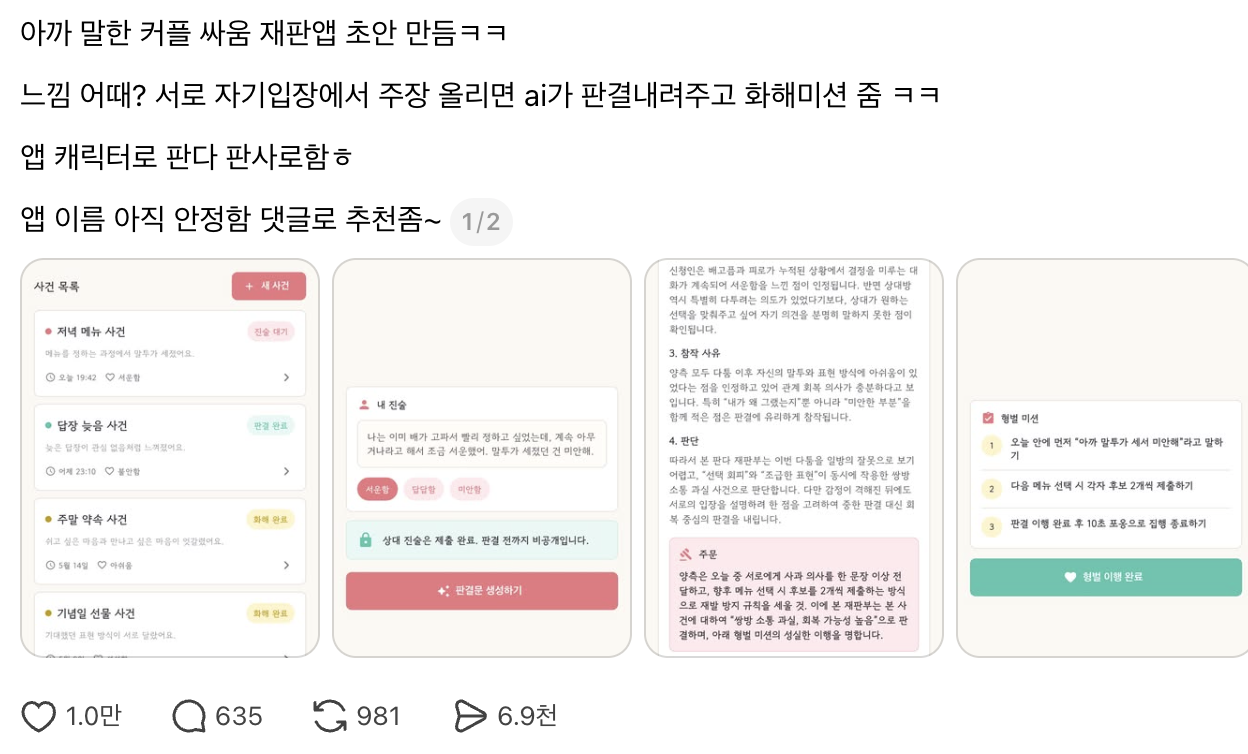
A user shared an idea for an app where AI judges arguments between couples. Each person would post their side. The AI would give a ruling and suggest a small mission for reconciliation.
There was even a panda-like judge character. The user asked people for name ideas. The replies were positive. People found it funny, wanted to try it, and treated it as something that might actually become a product.
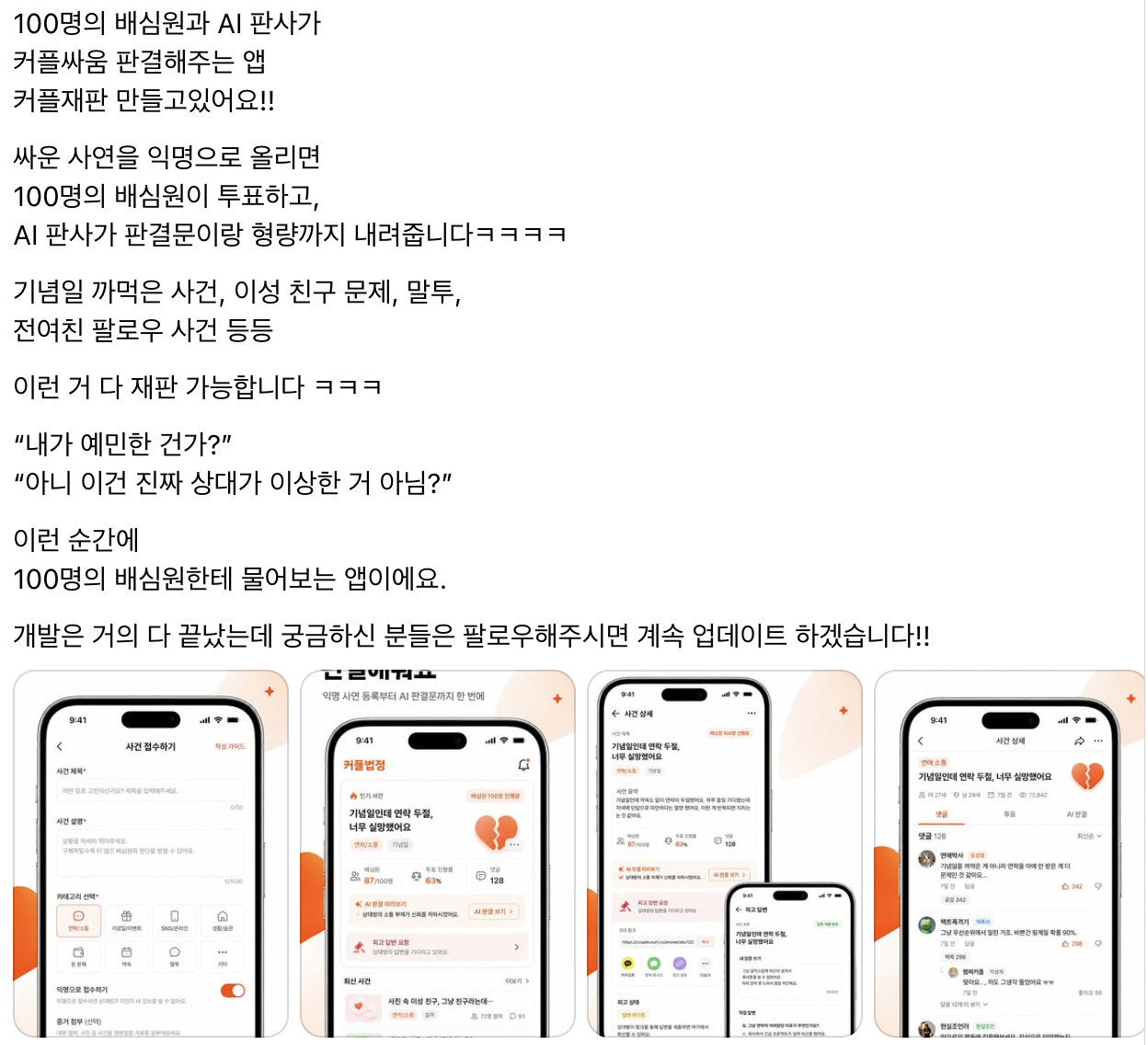
Not long after, another account posted an app with an almost identical concept.
In this version, people could anonymously submit stories about couple conflicts. One hundred jurors would vote. An AI judge would write a verdict and assign a sentence. The examples were familiar relationship disputes: forgetting an anniversary, problems with opposite-sex friends, following an ex-girlfriend.
The reaction was not good.
Many people felt it looked too much like a direct copy.
That discomfort is worth looking at carefully.
Ideas Are Common Now. Context Is Not.
AI development tools and vibe coding have made product building much faster than before.
It is now easier to see an idea online and quickly reproduce a similar UI, feature set, and prompt structure. In the past, turning a good idea into a working product was itself a barrier. That barrier has become lower.
So the moat around the idea itself is getting weaker.
But that is not exactly why people reacted badly here.
The first user was not quietly keeping an idea in a private notebook. They were sharing the process in public, asking for names, and building a small sense of expectation with the community.
People did not see it as a loose idea floating around the internet. They saw it as something someone was actively making.
When a very similar app appears in that context, people react emotionally, even before asking whether it is legally plagiarism.
In the AI era, copying has become easier. That does not mean people dislike copying any less.
People Notice The Attitude, Not Just The Feature
Copying is not new in startups.
When TikTok became popular, Reels and Shorts followed. When Notion succeeded, many Notion-like productivity tools appeared. After ChatGPT, countless wrapper apps were built.
From a market point of view, being copied can even mean the idea has been validated. Someone thought it was attractive enough to imitate.
But communities do not think only like markets.
People react less to the fact that a similar app exists, and more to the feeling that it was copied too directly. If the UI is similar, the concept is similar, the marketing tone is similar, and there is no mention of reference or inspiration, people feel that a line has been crossed.
This is especially visible in Korean communities.
There is a strong sense of respect for the original maker, fairness, loyalty, and protection for creators. The simple market argument that all ideas get copied anyway does not easily settle the matter.
The faster implementation becomes, the more closely people look at the creator's attitude and context.
Where The AI Moat Is Moving
It would be too small to see this only as a copycat controversy.
The more important question is this:
When anyone can quickly build an idea, what becomes the real advantage?
The answer is moving outside the idea itself.
Execution matters. Operations matter. Branding, community, distribution, user experience, and trust matter. Being first still has value, but the market is often decided by who can operate longer, create a better experience, and build a stronger brand.
That does not mean copying is fine.
It means the opposite.
When copying becomes easy, the way you copy matters more. If you referenced something, say so. If you were inspired by it, show your own angle and your own difference.
Do not just take the feature. Show why you can solve the problem differently.
AI has lowered the cost of implementation. It has not lowered the cost of trust.
What Remains Is Trust
This kind of situation will likely become more common.
Someone will share an idea. Someone else will be able to build something similar very quickly. The market will fill with products that look almost the same.
So builders will need more than speed.
They will need to understand the context they are building in. They will need to understand who they are in relationship with, where reference ends and replication begins, and what a community feels is fair.
The moat around ideas has become weaker. The moat around trust has become more important.
Copying in the AI era may be hard to avoid.
But people do not treat every copy the same way.
You can build something similar. The question is whether you made it meaningfully different, whether you reinterpreted it through your own point of view, and whether people can recognize that difference.
