Why AI writing sounds polished but not yours
AI writing often fails before the argument does. The first sign is not a wrong fact, but a rhythm that belongs to someone else.
When I use AI to write, the content is often correct.
The grammar is fine. The sentences are smooth. But something still feels off. It sounds translated. It does not sound like me.
I think that awkwardness often appears first in punctuation.
The first sign is punctuation
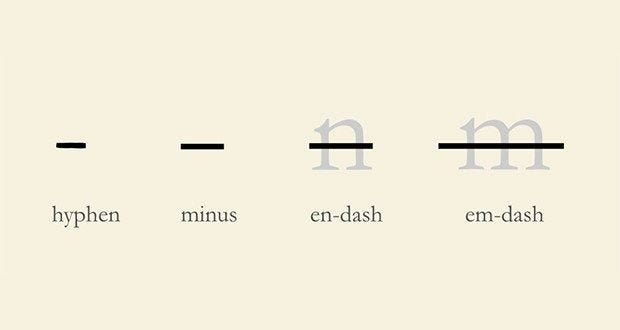
One of the clearest signals now is the em dash. It is common in English writing when a writer wants to add explanation or emphasis. The problem is that it does not appear that often in everyday Korean writing.
It can appear in literature or fiction. But in a normal blog post, it feels unusual.
Korean usually does not need it. A comma, parentheses, or a new sentence is enough. But AI tends to keep adding explanation inside one sentence. The sentence gets longer. The rhythm stays closer to English.
AI writing does not feel artificial because of difficult words. It feels artificial because the breath is wrong.
One em dash does not prove a text was written by AI. Some writers like that punctuation. In English, it can feel natural. But when someone who usually writes Korean suddenly starts using it again and again, readers notice.
The punctuation itself is not the real problem.
The problem is that the rhythm of the whole piece stops feeling like mine.
Why AI likes this rhythm
AI often tries to make writing sound polished and reasonably sophisticated. So it follows the style of essays, columns, and explainers that appear often in its training data.
In that style, the em dash is useful. It lets the sentence continue without stopping. It connects ideas smoothly. For a human reader, it can feel like a short pause. For AI, it is a convenient way to keep moving.
That is why AI writing often repeats the same patterns.
-
Too much explanation inside one sentence.
-
A sentence continues where it should have ended.
-
The same punctuation appears whenever emphasis is needed.
-
A Korean text keeps the rhythm of an English essay.
When these habits build up, the writing starts to feel strange. The grammar is right. The sentences are smooth. But it no longer sounds like the writer.
The problem with AI writing is not a wrong sentence. It is a very plausible sentence in someone else’s voice.
In Korean, it shows faster
In English, the em dash can feel normal.
In Korean, it usually does not.
Korean can handle short sentences well. If more explanation is needed, you can use parentheses. Or you can simply move to the next sentence. There is no need to borrow English-style punctuation to create emphasis.
A sentence like this is enough:
AI is fast. But because it is fast, it can erase a person’s tone just as quickly.
That does the job. If you add an em dash where it is not needed, the writing suddenly starts to look translated.
This is especially clear in blogs, newsletters, and social posts. Readers notice rhythm before grammar.
It is not only about the em dash
Avoiding the em dash is not enough. AI writing now has other repeated habits.
For example:
-
“The key is not A, but B.”
-
“What ultimately matters is...”
-
“It is not simply X, but Y.”
-
“This is an interesting point.”
-
Strong expressions that do not match the tone of the piece.
-
Paragraphs that all have a similar length and rhythm.
These phrases are not always bad. I use some of them too.
The problem is repetition. When the same structure appears three or more times, the writing starts to look like a template rather than a person thinking.
This is why AI-assisted writing can feel awkward even when the idea is yours. The content may come from you, but the sentence habits do not.
The best way to remove the AI feel is not to pretend to be more human. It is to reduce the draft back into your own usual voice.
The prompt I use to prevent it
Simply telling AI not to use em dashes is not enough. AI may remove one punctuation mark while keeping the same awkward rhythm.
So I prefer to guide punctuation, sentence length, and Korean rhythm together.
A prompt like this works better:
When writing in Korean, avoid English-style punctuation and translated sentence structures. Do not use em dashes. If you need to add explanation, split it into short sentences. Do not attach too much explanation to one sentence. Write with the rhythm of a natural Korean blog post. Do not repeat structures like “the key is not A, but B” or “it is not simply X, but Y.” Do not try to make the writing look more impressive. Write with the density of a personal note that has been lightly edited.
A shorter version can also work:
Do not use em dashes or English-style explanatory structures. Keep Korean sentences short. Use commas and parentheses sparingly. Avoid repeated AI-like phrases and write closer to natural spoken Korean.
The point is not to make a long blacklist.
The point is to show AI what rhythm you dislike.
If you want the prompt to be more specific, add a before and after example.
-
Avoid: The key is not speed. It is direction.
-
Prefer: What matters is not writing faster. It is not losing my own voice.
If you only say “write naturally,” the standard is too broad. But if you show one or two sentences you want to avoid, and one or two sentences that feel right, the result changes.
Numerical rules can help a little too. They should not become strict laws. Something like this is enough: keep sentences fairly short, reduce commas, and move extra explanation into a new sentence.
In the end, writing is rhythm
AI is not exposed by one punctuation mark.
It is exposed because it follows someone else’s writing habits too faithfully.
So when I write with AI, the part I need to edit most is not always the information. It is the rhythm. My usual sentence length has to come back. My word choice has to come back. My way of stopping and emphasizing has to come back.
AI can make a draft quickly.
But for that draft to become my writing, I still need to reduce it once in my own voice.
AI writing feels awkward not because AI cannot write. It feels awkward because it often writes in a stranger’s well-organized voice.
